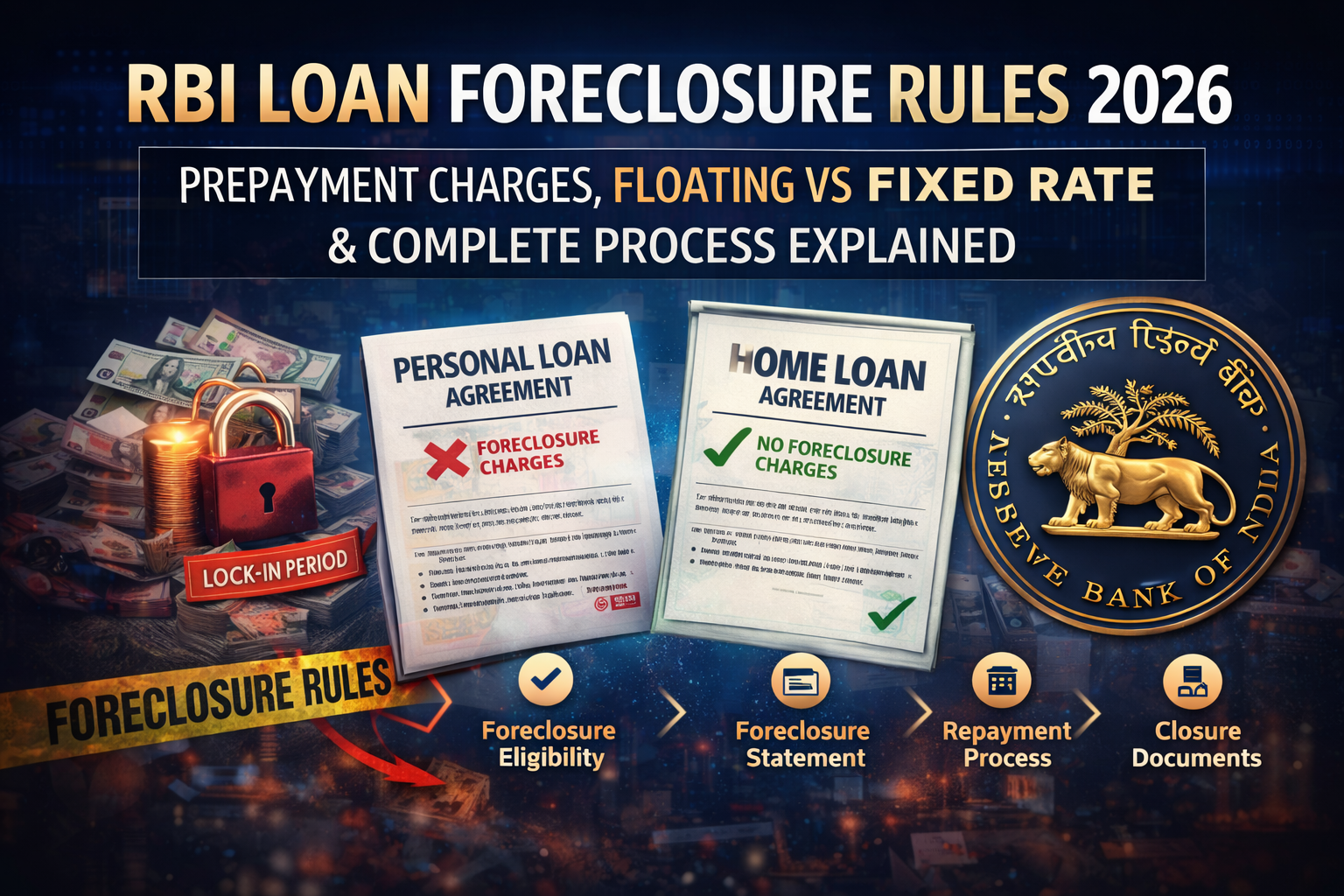
Synopsis: Loan foreclosure allows borrowers to repay the entire outstanding amount before the scheduled tenure ends. The Reserve Bank of India (RBI) has issued clear guidelines to protect borrowers from unfair prepayment charges. Here is a complete guide explaining foreclosure rules, charges, eligibility, and the proper process as per RBI regulations.
What Is Loan Foreclosure?
Loan foreclosure means repaying the entire outstanding loan amount before the end of the agreed tenure. By foreclosing a loan, borrowers can:
- Reduce total interest burden
- Improve financial stability
- Close liabilities earlier
- Improve credit profile
However, foreclosure is governed by RBI regulations and lender policies.
RBI Guidelines on Loan Foreclosure
The Reserve Bank of India has issued borrower-friendly directions to prevent unfair foreclosure and prepayment penalties.
1. No Foreclosure Charges on Floating Rate Loans
As per RBI rules:
- Lenders cannot levy foreclosure or prepayment charges on floating-rate term loans granted to individual borrowers for non-business purposes.
- From January 1, 2026, this rule also applies to floating-rate business loans given to individuals and Micro & Small Enterprises (MSEs), but only for loans sanctioned or renewed on or after this date.
This ensures borrowers are not penalized for early repayment.
2. Rules for Fixed Interest Rate Loans
For fixed-rate loans:
- Lenders are allowed to charge foreclosure/prepayment fees.
- Charges must be clearly disclosed in the sanction letter and loan agreement.
- Hidden or arbitrary penalties are not permitted.
Borrowers must carefully review the agreement before signing.
3. Transparency Is Mandatory
RBI mandates full disclosure of:
- Foreclosure charges
- Prepayment penalties
- Calculation method of charges
- Applicable conditions
All details must be shared upfront to avoid disputes later.
4. Timely Issue of Closure Documents
After full repayment:
- Lenders must return original documents.
- A Loan Closure Certificate must be issued.
- A No-Dues Certificate must be provided.
These documents are essential for legal and credit verification purposes.
When Can You Foreclose a Loan?
Foreclosure eligibility depends on:
- Interest rate type (fixed or floating)
- Lock-in period (as per lender policy)
- Outstanding dues
Lock-in periods are lender policies, not RBI mandates. Some lenders may restrict foreclosure during the lock-in period or charge higher fees.
Step-by-Step Process to Foreclose a Loan
Step 1: Check Eligibility
Review your loan agreement to confirm eligibility, interest type, and applicable charges.
Step 2: Request Foreclosure Statement
Ask the lender for a foreclosure statement containing:
- Outstanding principal
- Interest calculated till date
- Applicable charges (if any)
Step 3: Arrange Funds
Ensure you have sufficient funds to repay the entire outstanding amount. Partial payments are treated as part-payments, not foreclosure.
Step 4: Make Full Payment
Pay the entire amount via bank transfer or cheque and retain payment proof.
Step 5: Collect Closure Documents
After processing, collect:
- Loan Closure Certificate
- No-Dues Certificate
- Original property documents (for Home Loans)
Important Factors to Consider Before Foreclosure
Opportunity Cost
Using surplus funds to foreclose may affect liquidity. Always maintain an emergency fund.
Tax Benefits
Foreclosing a Home Loan may impact tax deductions. Consult a tax advisor before deciding.
Fixed Loan Charges
Compare potential interest savings with foreclosure charges before closing a fixed-rate loan.
Frequently Asked Questions (FAQs)
- What are foreclosure charges?
These are fees charged on fixed-rate loans for early closure. They must be disclosed upfront. - Does foreclosure reduce interest?
Yes. It eliminates future interest payments on the outstanding principal. - Does foreclosure improve credit score?
A properly closed loan may positively reflect in your credit report. - Can foreclosure be done after missed EMIs?
Yes, but overdue charges must be cleared first. - Do RBI rules apply to digital loans?
Yes. RBI foreclosure guidelines apply to all regulated lenders. - Can one joint borrower foreclose?
No. Consent of all co-borrowers is required. - Is it possible to get a loan without foreclosure charges?
Yes. Floating-rate loans for individuals (non-business) have no foreclosure charges under RBI rules.
Conclusion
RBI regulations protect borrowers from unfair foreclosure charges on floating-rate loans while allowing transparency for fixed-rate loans. Understanding your loan terms, reviewing eligibility, and following the correct procedure ensures a smooth and hassle-free foreclosure process.
📌 Key Takeaway
Loan foreclosure can significantly reduce interest burden, but charges depend on the loan type. RBI prohibits foreclosure fees on floating-rate loans for individuals, ensuring borrower protection. Always verify eligibility and charges before closing your loan early.