Income-Tax Bill 2025 Withdrawn: Key Takeaways and Old vs New Comparison
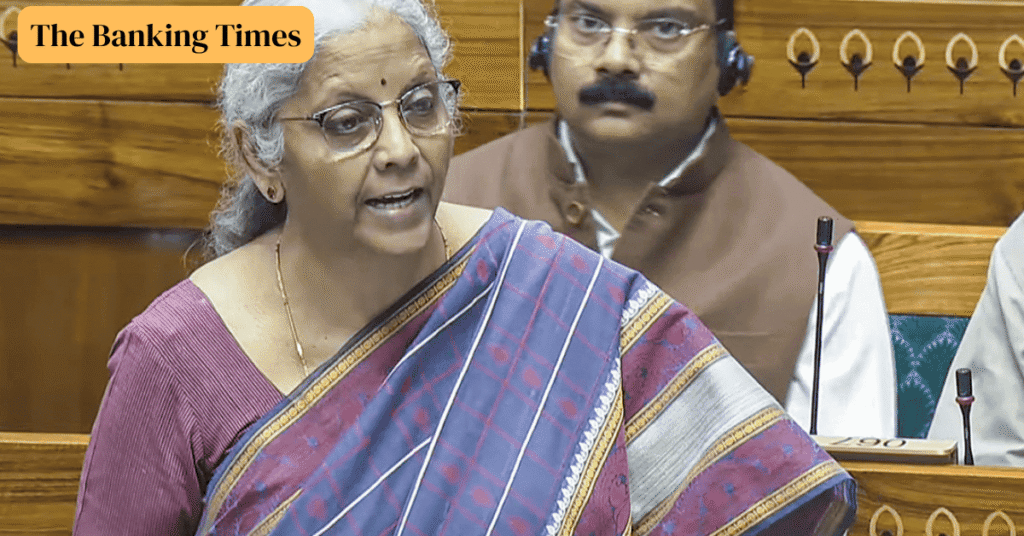
Finance Minister Nirmala Sitharaman on Friday moved to withdraw the Income-Tax Bill, 2025 in the Lok Sabha,
acting on recommendations from the 31-member Select Committee chaired by BJP MP Baijayant Panda. The House
approved the withdrawal amid Opposition uproar. The Committee’s review, tabled on July 21 at the start of the Monsoon
Session, set out to simplify India’s income-tax framework and align it with today’s economic and legal realities.
The Select Committee submitted a 4,584-page report with 566 suggestions—ranging from drafting fixes
to stakeholder-driven clarifications—designed to improve certainty, reduce litigation, and make compliance easier for
taxpayers and administrators alike.
What the Select Committee Recommended
- Refund relief: Amend the rule that disallows refunds when income-tax returns are filed after the due date.
- MSME alignment: Harmonise the definition of micro and small enterprises with the MSME Act.
- Non-profit clarity: Define income vs receipts more clearly; address anonymous donations; remove the
deemed application concept to reduce disputes. - Procedural fixes: Clearer provisions on advance ruling fees, TDS on provident funds, low-tax certificates,
and the scope of penalty powers.
Why the Bill Was Withdrawn
The government indicated it would reconsider the draft in light of the Committee’s extensive recommendations. The
objective is to re-introduce a more precise, easier-to-read law that preserves revenue certainty while lowering
compliance friction for taxpayers.
Old vs Proposed New Law — At a Glance
| Aspect | Income Tax Act, 1961 (Current Law) | Income-Tax Bill, 2025 (Proposed/Withdrawn Draft) | Committee Direction |
|---|---|---|---|
| Structure & Language | Dense, technical drafting built up over decades of amendments. | Intended to be concise, modern, easier to read and administer. | Refine drafting for clarity; remove ambiguity to cut litigation. |
| Refunds on Late ITR | Refunds generally disallowed if return filed after due date. | Proposed relaxation to allow refunds even when filed late (within limits). | Proceed with amendment to provide taxpayer relief. |
| MSME Definition | Not perfectly aligned with MSME Act definitions. | Align definitions for consistency across laws. | Adopt MSME Act alignment. |
| Non-Profit Rules | Ambiguity around “income” vs “receipts”; deemed application used. | Sharper definitions; clearer rules for anonymous donations. | Remove deemed application; tighten terminology to avoid disputes. |
| Procedures & Compliance | Unclear areas on advance ruling fees, PF TDS, low-tax certificates, penalties. | Codify clearer processes and limits. | Specify fees, certificate rules, and calibrated penalty powers. |
| Dispute Reduction | Interpretation heavy; frequent litigation. | Precision drafting intended to lower ambiguity. | Prioritise unambiguous language to reduce future cases. |
Context and Next Steps
The 2025 Bill was originally introduced on February 13, 2025 after the Union Budget 2024 announced a comprehensive
overhaul of direct taxes. With the draft now withdrawn, the government is expected to incorporate the Committee’s
566 recommendations and present a refined version. For taxpayers, this likely means a future law that is shorter,
clearer, and better aligned with contemporary business structures, MSME realities, and non-profit operations.
What It Means for Taxpayers Right Now
- No immediate change to filing or compliance—current provisions under the Income Tax Act, 1961 continue.
- Possible reliefs ahead on refunds for late ITRs and cleaner rules for NGOs, subject to the revised draft.
- Watch for notifications and the re-introduction of a redrafted Bill in a future session.