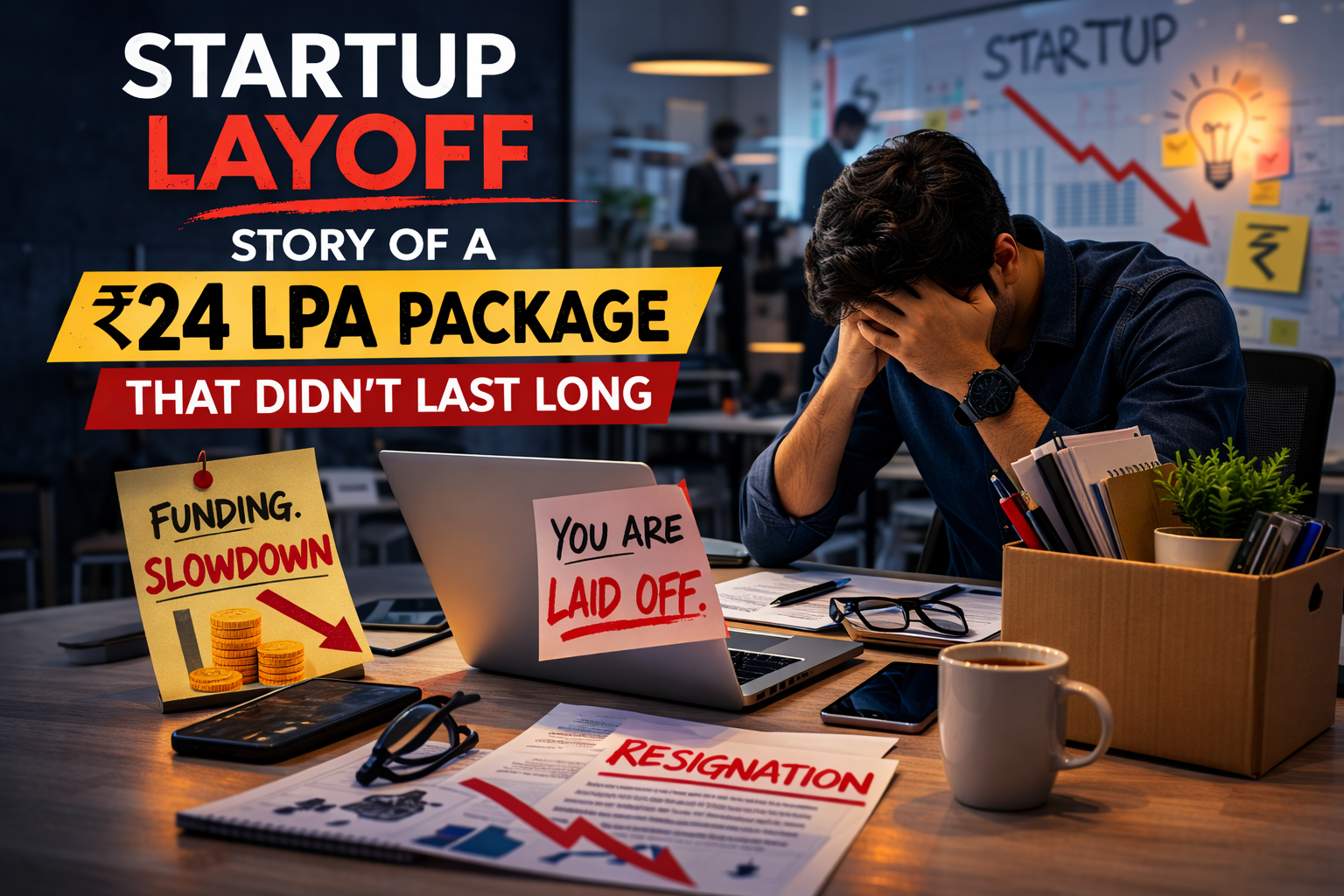
Synopsis: A viral post by @vivoplt on X highlights the layoff of a young professional earning Rs. 24 lakh per annum at a startup. The story has triggered conversations across India’s startup ecosystem about job security, funding risks, and the difference between company growth and personal stability.
Viral Startup Layoff Post Sparks Debate
A short post by @vivoplt on X (formerly Twitter) has sparked uncomfortable conversations across India’s startup circles.
The reason is simple. It tells a story that many young professionals quietly fear.
The post recounts the experience of a college acquaintance who joined a startup with a Rs. 24 LPA package. It was a fast-growing company with a young team and visible traction. For someone early in their career, it looked like the right place to build a future.
The “Invisible” Role That Kept Things Running
His role was not glamorous. He handled operational tasks:
- Fixing product issues
- Tracking refunds
- Solving small customer problems
- Ensuring systems ran smoothly
It was the invisible backbone of a functioning product.
He worked late nights. Put in long hours. And like many in India’s startup ecosystem, he believed that a growing company meant a secure job.
It didn’t.
Abrupt Layoff Amid Funding Slowdown
According to the post, the layoff happened suddenly. A brief meeting one morning. The explanation was simple:
- Funding had slowed down
- Costs needed to be reduced
- The product would continue
- His role would not
There were no performance allegations. No warning. No improvement plan. Just financial numbers.
Later, he reflected in a line that resonated widely:
“I thought growth meant stability.”
That sentence transformed a personal setback into a larger industry conversation.
High Pay Does Not Equal Security
India’s startup ecosystem has matured significantly over the last decade. High compensation packages for young professionals are now common in venture-backed firms.
But the post highlights a less discussed reality: compensation does not guarantee insulation.
When funding cycles tighten, companies prioritize:
- Revenue-critical roles
- Product continuity
- Cost efficiency
Operational support roles, even if essential, may face higher scrutiny during financial stress.
The post does not name the company or present financial data. It remains personal and restrained, which adds to its credibility.
A Shift in Perspective
The story does not end dramatically. There is no overnight comeback.
Instead, the individual reshaped his approach to career security. He focused on strengthening personal capabilities rather than relying solely on employer stability.
The post concludes with a grounded perspective:
Work well. Just remember that jobs are temporary but skills aren’t.
That distinction is increasingly relevant in a volatile hiring environment.
The Larger Lesson for Young Professionals
The Rs. 24 lakh package made the opportunity look secure. The growth narrative made it feel permanent. The outcome proved otherwise.
The message is not to avoid startups or ambition. It is to separate company growth from personal security.
In fast-moving ecosystems, the most durable assets may be:
- Your skills
- Your professional network
- Your adaptability
- Your preparedness
And sometimes, that realization comes after a very small meeting.
📌 Key Takeaway
Rapid startup growth does not automatically guarantee job stability. In uncertain funding cycles, personal skills and adaptability remain the most reliable forms of career security.