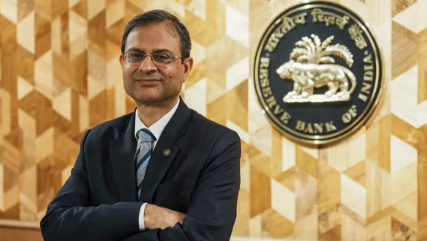
RBI Governor’s Address at FIBAC 2025: Charting New Frontiers for a Resilient Indian Economy
leading minds from India’s economic and financial ecosystem to deliberate on issues of national importance.
The theme, “Charting New Frontiers”, is both timely and relevant as we navigate global challenges such as
tariffs, trade disruptions, and geopolitical uncertainties. I am confident the discussions here will provide
valuable guidance to regulators, businesses, and policymakers as we collectively work towards building a
Viksit Bharat by 2047. I congratulate FICCI and IBA for organising this important forum.
I. India’s Story of Resilience and Stability
Just days after celebrating our 79th Independence Day, it is important to reflect on our journey.
India has made remarkable strides across sectors—education, health, agriculture, industry, infrastructure,
science, defence, finance, and governance. Today, our economy stands as a symbol of resilience and stability,
widely recognised for its achievements despite global headwinds.
Over the past four years (2021–22 to 2024–25), India’s GDP grew at an average of 8%,
driven by strong private consumption and investment. The IMF projects India will remain the
fastest-growing major economy, and soon the world’s third largest. Inflation is under control, fiscal indicators
are improving, and foreign exchange reserves have climbed to $695 billion as of August 2025,
covering more than 11 months of imports.
Healthy corporate balance sheets, well-capitalised banks, and robust governance reforms have strengthened
India’s macroeconomic fundamentals. However, given the uncertain global environment, we must collectively
push new frontiers of growth while ensuring stability.
II. Monetary Policy
Monetary policy has played a pivotal role in India’s economic stability. Despite global oil shocks, food
inflation, and supply chain disruptions, timely actions by the RBI—including calibrated rate
changes and liquidity management—helped anchor inflation expectations and sustain growth.
Price stability remains our primary objective, but it goes hand in hand with supporting
economic expansion when conditions demand it.
III. Regulation of Banks and NBFCs
RBI-regulated entities—banks, NBFCs, HFCs, and AIFIs—provide nearly three-fourths of all credit
to the real economy, highlighting their critical role. Regulation, like friction, must be balanced—too little
risks instability, too much stifles growth. Our regulatory approach is guided by five principles:
principle-based rules, proportionality, consultation, evidence-based policymaking, and agility.
Recent reforms include rationalising UCB norms, updating PSL guidelines, revising AIF investment rules, and
strengthening prudential standards. Looking ahead, we plan to implement Basel III risk guidelines by 2027,
streamline board-level approvals, and expand bank credit to productive sectors. A new Regulatory Review Cell
will ensure every regulation is reassessed every 5–7 years.
IV. Financial Inclusion
Development is incomplete without inclusion. India has made significant progress, as reflected in RBI’s
Financial Inclusion Index, but gaps remain in usage and quality. Strengthening
Business Correspondents (BCs) and expanding rural banking access are key priorities.
Banks have launched a nationwide campaign (July–September 2025) at Gram Panchayat level to
boost re-KYC and social security coverage. The MSME sector, vital for jobs and exports,
requires greater formal credit, supported by digital infrastructure like the Unified Lending Interface (ULI).
V. Customer Service
Customers remain the raison d’être of the financial system. RBI has integrated
conduct-related norms into regulations, introduced prepayment charge guidelines,
and issued draft rules on settlement of deceased customers’ claims.
Regulated entities must focus on transparency, fairness, and responsiveness.
Stronger grievance redressal mechanisms, an effective Ombudsman system, and customer-centric KPIs
in employee appraisals will be crucial for building trust.
VI. Technology for Credit and Efficiency
Technology is now the engine of growth and efficiency. Platforms like the
Account Aggregator (AA), ULI, and PRAVAAH are already
transforming credit delivery and regulatory services.
RBI will continue leveraging AI, ML, and digital innovation, while encouraging
regulated entities to scale up their technological adoption.
VII. Concluding Remarks
Financial stability and growth are not competing objectives—they are mutually reinforcing.
Regulators and industry are partners in building a Samridh Bharat.
With strong balance sheets and renewed confidence, banks and corporates must now work together
to create the next cycle of investment and growth.
Finally, in all decisions, we must keep the most vulnerable citizen at the centre,
in line with Gandhi’s Talisman and the spirit of Antyodaya. Together, let us strive for
a resilient, inclusive, and prosperous India.
Thank you. Namaskar. Jai Hind.