India slams move as ‘unfair, unjustified and unreasonable’
Us president Donald Trump has issued a new executive order that imposes an additional 25% tariff on Indian imports due to India’s continued purchase of Russian oil.
The latest hike raises the total tariff on Indian goods entering the United States to 50%, making it one of the highest trade levies imposed by the US on any country. The new rate will take effect on 27 August, exactly 21 days from the date of the executive order.
India calls US move deeply unfair
India’s foreign ministry issued a statement on Wednesday, calling the new tariffs “unfair, unjustified and unreasonable”. The ministry reiterated that India had already communicated its stance on Russian oil imports clearly to Washington.
“It is therefore extremely unfortunate that the US should choose to impose additional tariffs on India for actions that several other countries are also taking in their own national interest,” the official statement read.
“India will take all actions necessary to protect its national interests,” it added.
US says India’s oil imports threaten global security
The White House responded by justifying the move, stating that the Russian invasion of Ukraine “continues to pose an ongoing threat to US national security and foreign policy”. It argued that India’s continued oil purchases from Russia undermine the US-led global sanctions on Moscow.
The administration added that it will now monitor other countries purchasing Russian oil and “recommend further actions to the president as needed”.
India becomes Russia’s top oil buyer
Russia has become India’s largest oil supplier, accounting for over 35% of its total oil imports, according to energy analytics firm Kpler. India reportedly purchased around 1.75 million barrels of Russian oil per day in the first half of 2025.
India has defended its position by stating that it turned to Russian oil only after traditional energy routes were diverted to Europe following the war.
Trump warns of more sanctions
During an event at the White House, President Trump told the BBC that the tariff on India was “just the start”, hinting at broader secondary sanctions. “You’re going to see a lot more,” he said, warning of potential sanctions targeting other Russian oil buyers.
The move follows talks held in Moscow between Trump’s envoy Steve Witkoff and Russian officials, aimed at exploring a peace deal between Russia and Ukraine.
Impact on Indian exports
The new tariff will significantly impact key Indian export sectors such as textiles, gems and jewellery, seafood, and auto parts – all major employment generators. Products like electronics and pharmaceuticals remain exempt from the levy for now.
The Federation of Indian Export Organisations (FIEO) called the move “extremely shocking”, warning that it could hit more than 55% of India’s total exports to the US.
According to the Global Trade Research Initiative (GTRI), the steep tariff could result in a 40–50% reduction in Indian exports to America due to rising costs.
Experts advise India to stay patient
Ajay Srivastava, former Indian trade official and head of GTRI, said India should avoid retaliation. “India should remain calm, avoid retaliation for at least six months, and recognise that meaningful trade negotiations with the US cannot proceed under threats or mistrust.”
A test of US-India ties
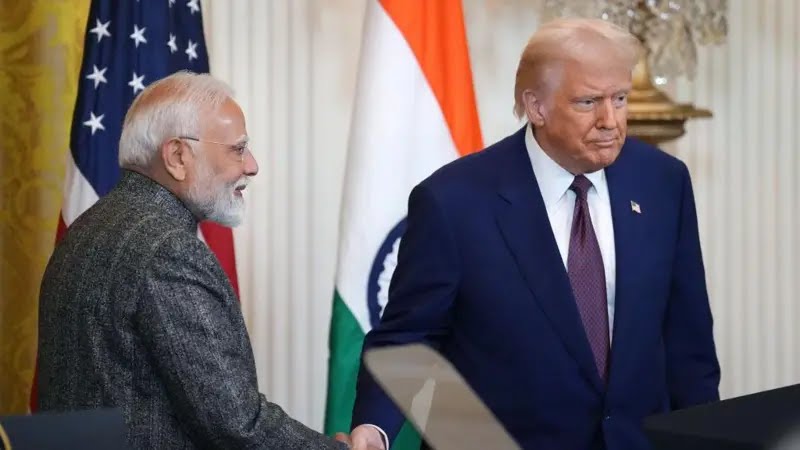
The current tension marks a dramatic downturn in the relationship between Trump and Indian Prime Minister Narendra Modi. Though both leaders once hailed each other as close allies and participated in political events in each other’s countries, the decision to impose additional tariffs signals growing strategic divergence.
Critics in India also point out that despite imposing harsh sanctions, the US itself conducted around Rs. 29,000 crore ($3.5 billion) in trade with Russia last year.
India questions US double standards
India has previously criticised the US for what it sees as hypocrisy. A spokesperson noted that the US had encouraged India to purchase Russian oil at the beginning of the war to stabilise global energy markets.
India argues that it acted in its own economic interest as global supply chains were disrupted and energy prices soared.