Synopsis: Addressing the SBI Banking & Economics Conclave, RBI Governor Sanjay Malhotra outlined the central bank’s regulatory philosophy, stressing that financial stability remains the cornerstone of India’s economic growth. He traced the evolution of India’s banking reforms over the past decade and explained how regulation must balance innovation, efficiency, and systemic resilience in an era of rapid technological change.
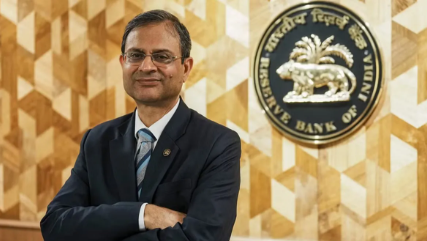
RBI Governor Sanjay Malhotra at SBI Banking & Economics Conclave
RBI Governor Sanjay Malhotra said he was delighted to address leaders of India’s banking and financial sector at the SBI Banking and Economics Conclave. Thanking the Chairperson of SBI, he noted that the conclave comes at a time of global uncertainty, geopolitical realignment, and rapid technological transformation — a phase that presents both challenges and opportunities for the financial system.
Recalling his address at the same conclave last year in his capacity as Revenue Secretary, Malhotra said that while his earlier remarks focused on tax reforms, his current address centres on recent regulatory measures undertaken by the Reserve Bank of India. He highlighted RBI’s consultative regulation-making framework, which includes impact analysis and clear articulation of regulatory objectives.
The Purpose of Regulation
Reiterating his first Monetary Policy Committee (MPC) statement delivered in February, the Governor said that financial stability remains the “north star” for the RBI. He cautioned that short-term growth achieved at the cost of stability can have severe long-term consequences, noting that research shows financial instability can erase growth gains and prolong economic recovery.
At the same time, Malhotra emphasised that economic progress also requires greater efficiency and innovation. He acknowledged that regulation involves trade-offs, as measures designed to enhance stability inevitably impose certain costs.
“The attempt is always to strike the right balance,” he said, adding that RBI’s recent regulatory proposals aim to balance the drive to innovate and grow with the responsibility to protect the financial system.
In a rapidly evolving banking environment shaped by transformative technologies, the Governor said regulators cannot freeze the system at a particular point in time. Instead, regulation must guide evolution within guardrails that ensure stability, fairness, and resilience.
He described RBI’s approach as “responsive conservatism” — a regulatory philosophy that prioritises stability while remaining open to reform.
Backdrop: A Decade of Financial System Reforms
Providing context, Malhotra briefly revisited developments in India’s financial system over the past decade. Following the Global Financial Crisis, aggressive fiscal and monetary stimulus combined with regulatory forbearance led to the “twin balance sheet” problem — stressed corporates and banks — and India being labelled among the “Fragile Five”.
From 2014 onwards, authorities undertook what he described as a foundational surgery to restore financial health. Key measures included the Asset Quality Review (AQR) in 2015, which forced banks to recognise hidden NPAs, alongside improvements in supervision.
The Prompt Corrective Action (PCA) framework, consolidation of public sector banks from 27 to 12, and a large recapitalisation programme strengthened bank balance sheets and revived lending capacity. The introduction of the Insolvency and Bankruptcy Code (IBC) in 2016 fundamentally transformed India’s credit culture.
Parallel reforms strengthened macroeconomic stability through flexible inflation targeting, deeper forex markets, and gradual capital account liberalisation.
Stronger Banks, Evolving Regulation
Malhotra noted that India’s financial intermediation landscape has become more layered, with fintechs, NBFCs, capital markets, and securitisation playing a growing role in credit origination and risk transfer. Recent project finance directions and proposed forward-looking Expected Credit Loss (ECL) provisioning aim to improve early risk recognition.
Highlighting the improved health of Indian banks, he said credit and deposits have nearly tripled over the last decade. Capital adequacy has strengthened, asset quality has improved sharply, and profitability has rebounded strongly.
“This evolution means prudential rulebooks must also evolve,” the Governor said, adding that stronger banks, sharper supervision, and deeper market-based risk transfer mechanisms allow for calibrated regulatory adjustments.
He concluded that recent regulatory measures should be viewed against this backdrop of improved resilience and maturity of India’s banking system.
📌 Key Takeaway
RBI Governor Sanjay Malhotra emphasised that regulation must balance stability, efficiency, and innovation. Drawing lessons from a decade of banking reforms, he said India’s stronger and more resilient financial system now allows for calibrated, forward-looking regulation in a rapidly changing global and technological environment.